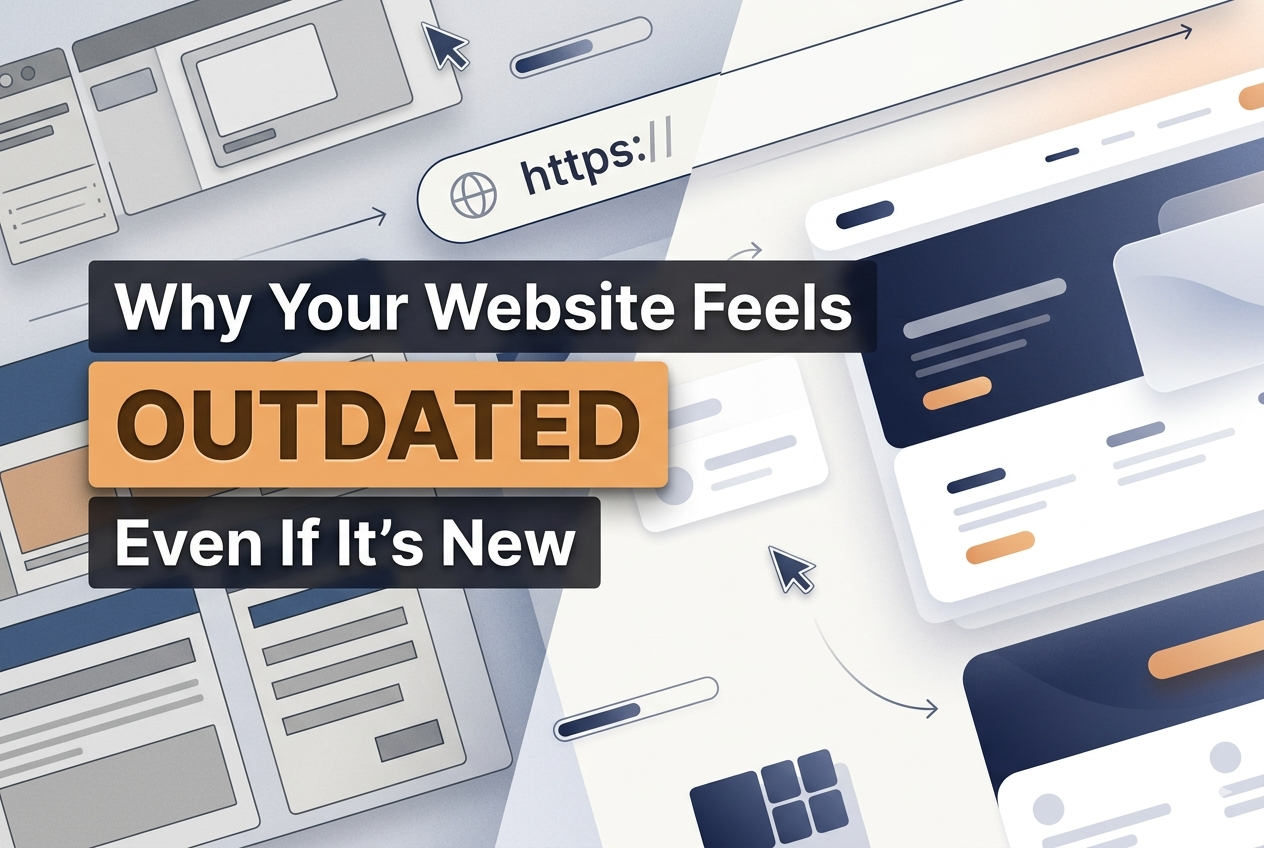
Launching a new website should make your business feel fresh, professional, and ready to impress customers. However, many business owners invest in a newly built website only to realize that something still feels off.
The design may be technically clean and functional, but visitors leave quickly, engagement stays low, and the website does not create the premium impression expected. In many cases, the issue is not that the website is old, it is that the experience feels outdated.
A website can be newly built and still fail to feel modern if it lacks the design standards, usability, and user experience that today’s audiences expect.
New Does Not Always Mean Modern
One of the biggest misconceptions in web design is assuming that a recently built website automatically feels modern. In reality, many websites use outdated layouts and design patterns even when they were developed recently. Generic templates, predictable structures, and overused design styles can make a new website feel years behind current standards.
Common signs of an outdated-looking website include:
- Flat and lifeless layouts
- Weak visual hierarchy
- Generic typography choices
- Sections that feel repetitive or template-based
Modern websites are not only visually attractive, they create a polished presence that feels intentional and unique.
Static Websites Feel Less Engaging
A website that lacks movement and interaction often feels flat, regardless of how good the design looks. Today’s users expect websites to feel dynamic and responsive. Small interactive details help create a smoother and more satisfying browsing experience.
Important interactive elements that improve user experience include:
- Hover effects that highlight clickable areas
- Smooth transitions between sections
- Subtle animations that improve scrolling flow
Without these features, a website can feel static and lifeless, making the overall experience less engaging for visitors.
Mobile Experience Matters More Than Ever
Most website traffic today comes from mobile devices, yet many websites are still designed primarily for desktop screens. If a website does not feel smooth and intuitive on mobile, users often perceive it as outdated, even if the desktop design looks polished.
Common mobile design problems include:
- Cramped text and poor readability
- Buttons that are difficult to tap
- Inconsistent spacing between sections
- Slow loading performance on mobile networks
A modern website should be designed with mobile usability as a priority, not as an afterthought.
Confusing Layouts Hurt User Experience
Strong website design should feel effortless to the user. If visitors need to think too much about where to click, what to read next, or how to navigate the page, the design is working against them. A confusing experience can quickly drive users away.
Some common usability mistakes include:
- Too many competing elements on screen
- No clear call to action
- Important information buried too deep
- Poor content flow between sections
Modern websites guide users naturally through the content, making every next step feel obvious and intuitive.
Branding May Be Missing
A visually appealing website can still fail if it does not communicate a memorable brand identity. Many websites look professional but lack uniqueness, making them feel generic and forgettable. If your website could easily belong to any business in your industry, it is not creating a strong brand impression.
Elements that strengthen brand identity include:
- Consistent and intentional color schemes
- Premium typography choices
- Distinct visual design style
- Clear personality and messaging
A strong brand presence helps visitors remember your business and builds trust more effectively.
Poor Speed Makes Websites Feel Old
Performance is one of the most overlooked factors in modern web design. Even a beautiful website can feel outdated if it loads slowly or responds poorly. Speed directly impacts how users perceive the quality and professionalism of your business.
Common reasons for poor website speed include:
- Large, unoptimized images
- Weak hosting infrastructure
- Too many unnecessary scripts or plugins
- Lack of performance optimization
In today’s digital environment, speed is associated with professionalism and modernity. A fast website feels polished, while a slow one feels outdated.
Following Old Trends Can Make You Look Behind
Some websites feel outdated simply because they follow design trends that are no longer current. What looked modern a few years ago may now feel overused or uninspired. Businesses that rely too heavily on outdated trends often end up with websites that blend in instead of standing out.
Examples include:
| Outdated Trend | Why It Feels Old |
|---|---|
| Generic minimal layouts | Lacks uniqueness and personality |
| Overused stock visuals | Feels impersonal and repetitive |
| Basic scrolling patterns | Offers no memorable interaction |
| Template-style structures | Makes the site feel unoriginal |
Modern websites succeed by balancing trends with originality and strategic design thinking.
What Makes a Website Feel Modern Today
A truly modern website goes beyond aesthetics. It creates an experience that feels polished, responsive, and thoughtfully designed from the first click to the final interaction.
A modern website should feel:
- Fast and responsive from the moment it loads
- Smooth and fluid while scrolling
- Interactive without being distracting
- Designed with mobile-first thinking
- Clear and focused in its user journey
When these elements work together, a website immediately feels more premium and trustworthy.
Final Thoughts
A website does not need to be old to feel outdated. If your website lacks modern design principles, smooth usability, mobile optimization, strong branding, and high performance, visitors will notice immediately. A truly effective website should not just exist online, it should create an experience that strengthens your brand and encourages action.
At QubeSys, we build websites that are designed to feel premium, modern, and conversion-focused from every angle. Whether you need a high-converting landing page, a polished Framer website, or a scalable Shopify store, our team creates digital experiences built around performance, user psychology, and strategic design. If your current website looks new but still feels behind, contact QubeSys today and let us help you create something that truly stands out.
Subscribe To Receive The Latest Updates
We talk about tech only
Add notice about your Privacy Policy here.