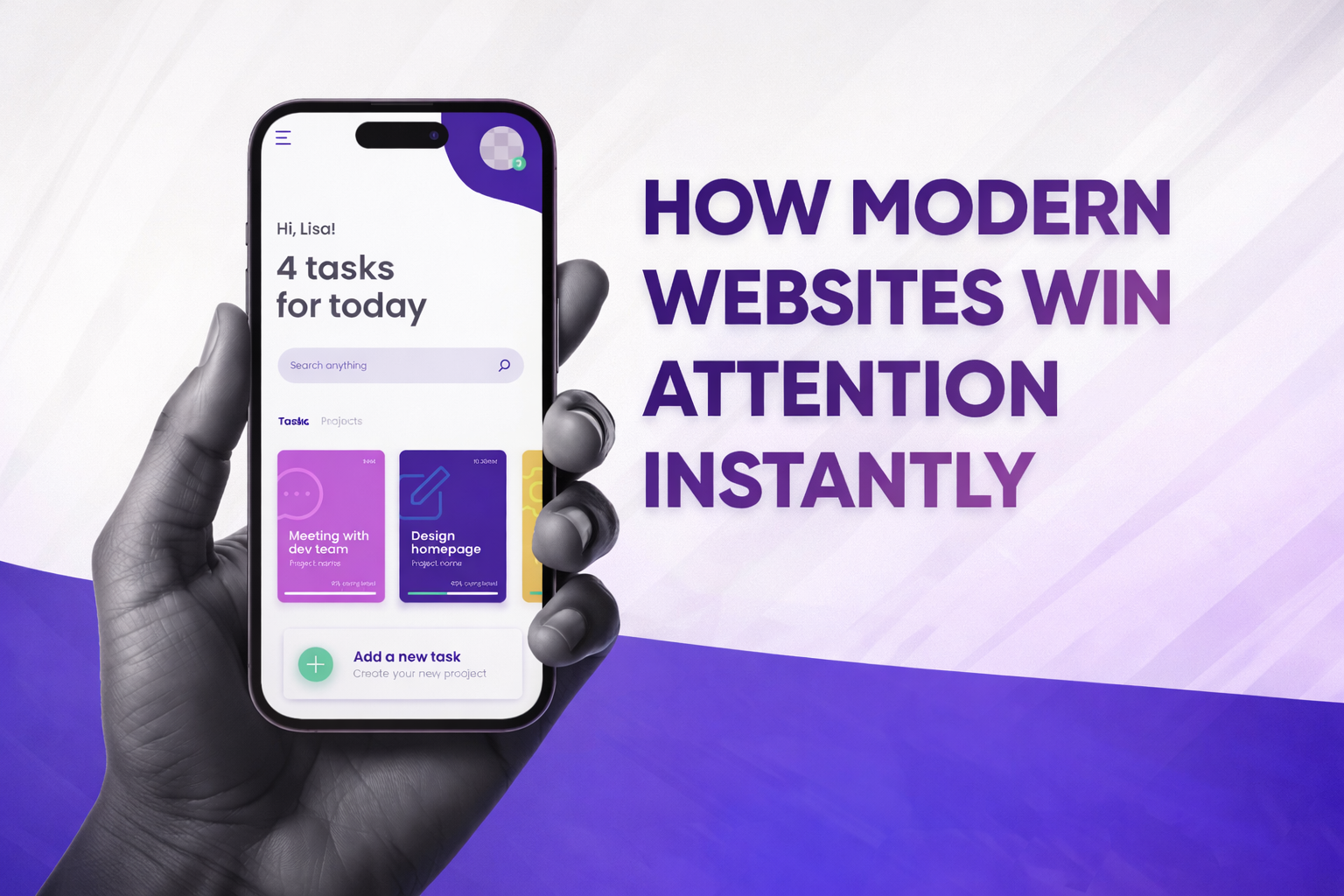
The moment someone lands on your website, they begin forming an opinion instantly. Before they read your content, compare your pricing, or understand your offer, they decide whether your business feels trustworthy, professional, and worth their time. In today’s digital environment, websites are no longer just competing for clicks. They are competing for attention in the first few seconds of interaction.
Modern websites are designed with this behaviour in mind. They understand that users do not carefully analyse every detail when they arrive. Instead, visitors scan quickly, judge emotionally, and decide almost immediately whether to stay or leave.
First Impressions Shape User Decisions
Website visitors often judge your business before they consciously realise it. Within moments of landing on a page, they begin asking themselves silent questions. They want to know whether the website feels modern, whether it looks trustworthy, and whether navigating it feels easy or confusing.
A well designed modern website answers all of these questions instantly through layout, visuals, structure, and usability. Without needing to explain anything, the design itself communicates professionalism and credibility. That immediate sense of trust can determine whether a visitor continues exploring or leaves the page.
The Hero Section Determines Engagement
The first visible section of a website plays a major role in whether users continue scrolling. This area should communicate value quickly and clearly. Many outdated websites waste this space with long company introductions, vague taglines, or generic stock imagery that adds little value.
Modern websites take a more focused approach by using:
- One clear and compelling headline
- One simple supporting message
- One purposeful visual element
- One obvious call to action
When users instantly understand what the business offers and why it matters to them, they are more likely to stay engaged.
Speed Builds Trust and Confidence
Website speed affects far more than technical performance. A slow loading website often feels unreliable, outdated, or poorly maintained, even if the content itself is strong. Users associate speed with professionalism, and delays create frustration that reduces trust.
Modern websites are designed to feel responsive from the very beginning. Smooth loading experiences, fast transitions, and immediate feedback during interaction help users feel confident while browsing. This is one of the reasons platforms like Framer have become popular among modern businesses, as they help create websites that feel quick, polished, and fluid.
Design Should Guide, Not Distract
Strong website design is not about adding more visual elements. It is about directing the visitor’s attention naturally toward the most important information. A modern website guides users through the page in a structured way, helping their eyes move from the headline to supporting content and then toward the call to action.
This is achieved through thoughtful spacing, typography, visual hierarchy, and layout balance. Rather than overwhelming users with clutter, effective design makes navigation feel effortless. When users understand where to look next without thinking, engagement improves significantly.
Mobile Experience Matters More Than Ever
For most businesses, the majority of visitors now access websites through mobile devices. That means many users will form their first impression of your brand on a phone rather than a desktop computer. If the mobile experience feels difficult, cluttered, or poorly optimised, visitors often leave immediately.
Modern websites prioritise mobile usability by:
- Using clear and readable text sizes
- Keeping navigation simple and thumb friendly
- Reducing unnecessary clutter
- Highlighting important buttons clearly
- Maintaining strong visual structure on smaller screens
A premium mobile experience helps businesses keep users engaged regardless of device.
Human Focused Content Improves Connection
Modern websites avoid overly corporate or complicated language. Instead of sounding like formal brochures, they communicate in a way that feels clear, natural, and human. Visitors respond better to content that feels direct, conversational, and helpful.
This means modern websites focus on:
- Short and readable sentences
- Clear explanations without jargon
- Messaging that sounds natural and relatable
- Straightforward value driven communication
When website copy feels authentic and easy to understand, users are more likely to trust the brand behind it.
Consistency Creates Professionalism
One of the most overlooked aspects of website design is consistency. Visitors may not consciously notice it, but a consistent design system creates an immediate sense of professionalism and trust. When colours, typography, icons, and layouts all feel aligned, the website appears more polished and credible.
Modern websites maintain visual consistency by using structured design systems rather than mixing styles randomly. This creates a cohesive experience that reinforces brand identity and makes the website feel intentional.
Simplicity Increases Focus
Too many options can overwhelm visitors and reduce conversions. When users are presented with excessive choices, cluttered navigation, or multiple competing actions, they often hesitate instead of taking action.
Modern websites improve engagement by simplifying the experience. They reduce distractions, focus each page on one primary objective, and guide users clearly toward the next step. Simplicity helps users stay focused and move confidently through the website.
SEO and User Experience Must Work Together
Successful modern websites are not built only for visual appeal. They are also structured to perform well in search engines while maintaining a smooth user experience. Businesses no longer need to choose between SEO and design quality because the best websites achieve both together.
Modern websites combine:
| SEO Element | User Experience Benefit |
|---|---|
| Clean page structure | Easier readability and navigation |
| Proper heading hierarchy | Better content organisation |
| Fast loading speeds | Improved engagement and lower bounce rates |
| Optimised mobile layouts | Better usability across devices |
| Clear internal linking | Smoother browsing journey |
This balance creates websites that rank well and keep users engaged once they arrive.
Final Thoughts
Attention online is limited, and businesses rarely get a second chance to make a first impression. If a website does not immediately capture interest, build trust, and guide visitors clearly, potential customers often leave without taking action. Modern websites succeed because they are built around speed, clarity, usability, and emotional connection from the very first second.
At QubeSys, we create modern websites designed to hold attention, build trust, and drive business growth. Whether you need a high performance Framer website, a conversion focused landing page, or a scalable Shopify store, our team builds digital experiences that combine design, speed, and strategy. Contact QubeSys today to build a website your visitors will want to stay on.
Subscribe To Receive The Latest Updates
We talk about tech only
Add notice about your Privacy Policy here.