Most website disasters do not start with big redesigns.
They start with a sentence that sounds harmless.
“Can we just move this button?”
“Just change the color.”
“Just add one more section.”
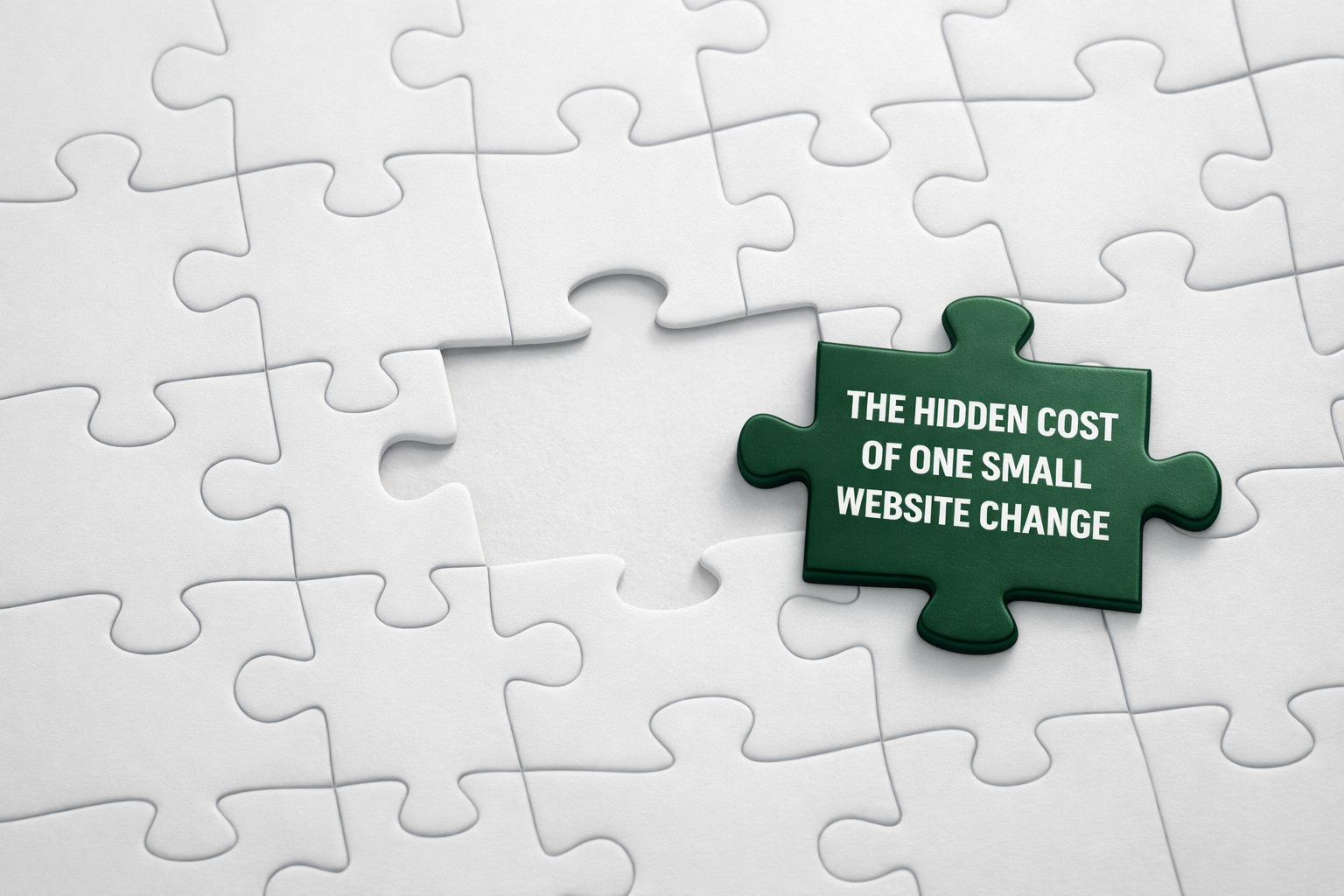
That word just has silently cost businesses thousands in lost leads, lower rankings, and broken trust. And the worst part? Most owners never connect the damage to that one tiny change.
Let’s break down what really happens behind the scenes.
🧠 Why “Small” Website Changes Are Rarely Small
From the outside, a website looks like blocks, text, and buttons.
From the inside, it is a system where everything is connected.
When you touch one part, something else always reacts.
A color change affects contrast and accessibility.
A layout tweak affects user flow.
A button move affects attention and clicks.
A headline edit affects SEO rankings.
Websites do not break loudly. They break silently.
🔄 The Domino Effect Most Businesses Ignore
One change rarely stays isolated.
Here is how a simple request often snowballs:
🎯 Example: Moving a Call-To-Action Button
You move the button slightly higher.
Now:
-
The user scroll pattern changes
-
Heatmap behavior shifts
-
Conversion rate drops quietly
-
A/B data becomes unreliable
-
Mobile layout feels cramped
-
SEO engagement signals weaken
Nothing crashes. Nothing looks broken.
But leads slow down.
📉 The Invisible Conversion Loss Problem
This is the most dangerous cost because it is hard to spot.
Your website still works.
Traffic still comes in.
Forms still submit.
But fewer people take action.
Most businesses blame:
-
Market conditions
-
Ad performance
-
Seasonality
Very few suspect that “one small website change” from last month.
🔍 SEO Damage That Takes Months To Notice
Search engines love stability and clarity.
Small changes that hurt SEO:
-
Changing heading structure
-
Rewriting hero copy without intent mapping
-
Removing internal links
-
Tweaking page speed unintentionally
-
Changing URL structure slightly
The ranking drop does not happen overnight.
It happens slowly, quietly, and painfully.
By the time you notice, recovery takes months.
🧪 Broken Testing And False Decisions
Many teams tweak websites while running ads or experiments.
This creates bad data.
You think:
-
Ads are not converting
-
Landing pages are weak
-
Users are not interested
Reality:
Your website changed mid-cycle and corrupted the results.
Now business decisions are made on flawed insights.
🧱 Trust Erosion Happens Faster Than You Think
Users may not say it, but they feel it.
-
A misaligned section feels unprofessional
-
A color change feels off-brand
-
A slower load breaks confidence
-
A confusing layout raises doubt
Trust is built in seconds and lost even faster.
Once lost, users do not complain. They leave.
💰 The Real Cost Breakdown No One Calculates
That “small change” often costs more than expected:
-
Lost leads over weeks
-
Lower ad ROI
-
SEO ranking drops
-
Redesign rework costs
-
Developer time fixing side effects
-
Missed growth opportunities
And the biggest cost?
Not knowing what caused the problem.
🛠️ How Smart Businesses Handle Website Changes
Professional teams follow a system, not instincts.
They:
-
Understand user intent before changing anything
-
Protect conversion paths
-
Test changes properly
-
Monitor performance after updates
-
Design with scalability in mind
This is why platforms like Framer and Shopify, when built properly, outperform rushed custom tweaks.
🚀 “Just” Is The Most Expensive Word
There is nothing wrong with improving your website.
The mistake is treating websites like static posters instead of living systems.
If you want changes that grow your business instead of quietly damaging it, you need strategy, not guesswork.
📞 Ready To Make Website Changes The Right Way?
At Qubesys, we design and develop high-conversion Framer websites, landing pages, and Shopify stores that scale without breaking performance, SEO, or trust.
Whether you want to optimize an existing site or build a fresh one from scratch, we focus on results, not “just small changes.”
👉 Contact Qubesys today and turn your website into a growth engine, not a silent liability.