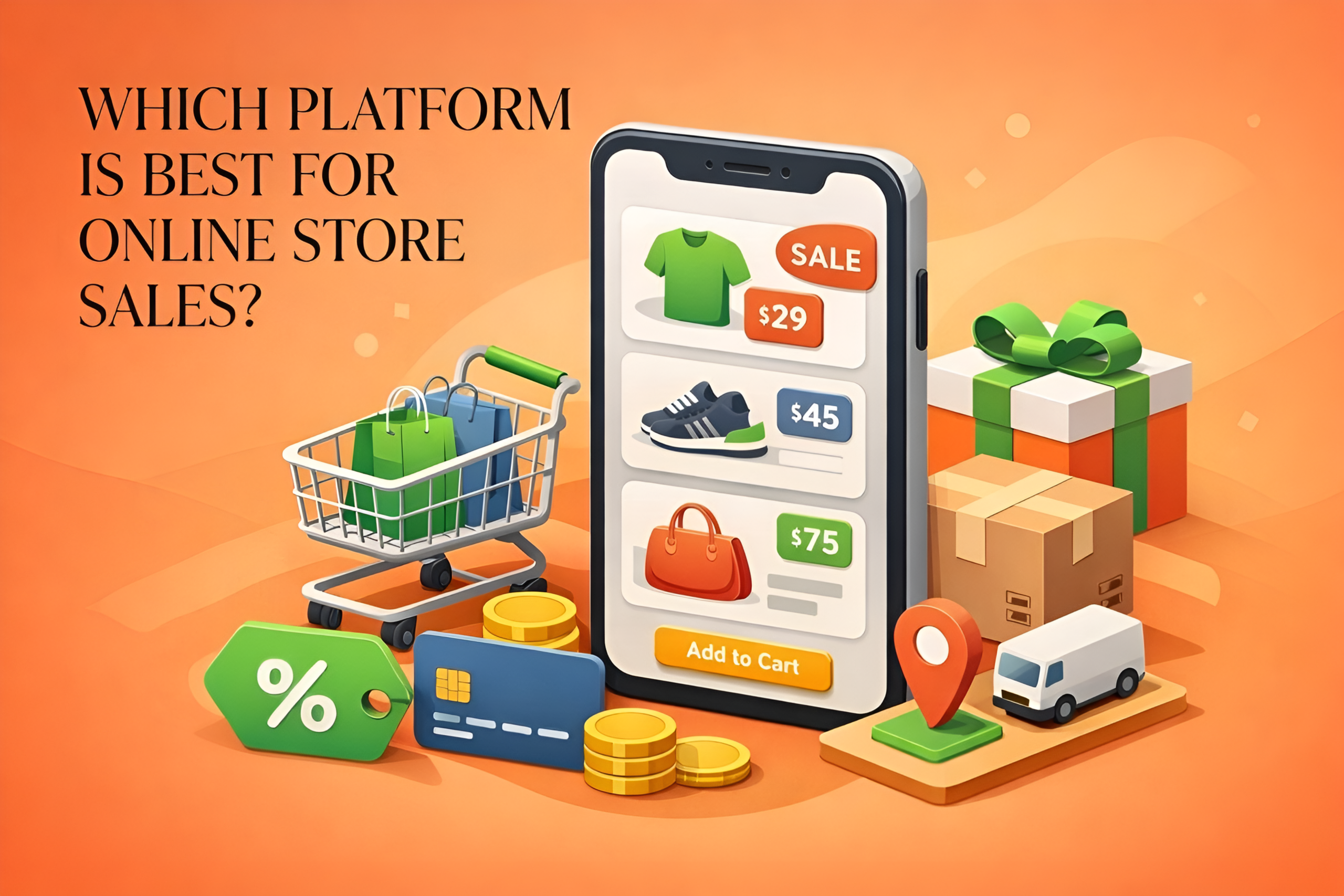
If you are planning to launch an online store or struggling to scale your current one, the platform you choose matters more than most business owners realize. Many ecommerce stores fail not because the product is poor, but because the platform creates friction, slows down the user experience, or cannot handle growth when traffic increases.
The real question is not which platform is the most popular. The real question is which platform will actually help your business generate more sales. Choosing the right ecommerce platform is a strategic decision that directly impacts your store’s performance, user experience, and long-term scalability.
Why Platform Choice Directly Impacts Sales
Your ecommerce platform controls nearly every part of the customer buying experience. It affects page speed, checkout flow, mobile responsiveness, payment reliability, SEO structure, and how well your store handles increased traffic during campaigns or promotions.
A slow or confusing platform can quietly reduce conversions, even if your product and marketing strategy are strong. If visitors experience friction while browsing or checking out, they are far more likely to leave before completing a purchase. That is why platform selection should never be treated as just a technical choice. It is a direct sales and growth decision.
Comparing Popular Ecommerce Platforms
There are several leading ecommerce platforms available, and each one is designed for different business needs. Understanding how they compare can help you choose the right solution based on your goals rather than assumptions.
| Platform | Best For | Key Advantages | Limitations |
|---|---|---|---|
| Shopify | Fast growth and serious ecommerce sellers | Fast loading speed, seamless checkout, reliable payment integrations, strong app ecosystem, scalable under heavy traffic | Monthly subscription fees, less backend flexibility than open-source platforms |
| WooCommerce | Content-driven and SEO-focused ecommerce stores | Full control over design and backend, excellent blogging features, no fixed platform fee | Performance depends on hosting, requires regular maintenance, can struggle during traffic spikes if poorly optimized |
| Framer | Landing page-focused and funnel-based selling | Ultra-fast performance, modern design flexibility, storytelling-based layouts, ideal for premium funnels | Not a traditional ecommerce platform, requires integrations for full ecommerce functionality |
| Magento | Enterprise-level ecommerce businesses | Highly scalable, deep customization options | Expensive to develop, high maintenance, complex to manage |
Shopify for Serious Ecommerce Growth
Shopify remains one of the strongest ecommerce platforms for businesses focused on selling products online efficiently. It is built specifically for ecommerce, which means nearly every feature is designed to help businesses maximize conversions and simplify operations.
Shopify stands out because it offers fast loading speeds, a seamless checkout experience, secure payment processing, and the ability to handle large traffic spikes without performance issues. This makes it especially valuable for brands running paid advertisements or preparing for seasonal sales.
It is ideal for direct-to-consumer brands, dropshipping businesses, subscription-based products, and stores heavily dependent on paid traffic. If your goal is maximizing sales while minimizing technical complexity, Shopify is one of the best available options.
WooCommerce for Flexibility and SEO
WooCommerce, built on WordPress, is a powerful platform for businesses that want flexibility and plan to use content marketing or SEO as major growth channels. It allows for extensive backend customization and offers excellent blogging functionality.
Because WooCommerce is highly flexible, it works well for businesses that need custom features or more control over their store structure. However, it also requires stronger technical management. Performance often depends on the quality of hosting, plugin configuration, and ongoing maintenance.
WooCommerce is best suited for businesses with a long-term SEO strategy, content-heavy marketing plans, and access to technical support for regular optimization and maintenance.
Framer for Conversion-Focused Funnels
Although Framer is not a traditional ecommerce platform, it has become increasingly popular for businesses creating high-converting landing pages, premium product launches, and funnel-based websites. It offers exceptional speed, design flexibility, and storytelling-based layouts.
Framer is especially useful for businesses selling through focused landing pages rather than full catalog stores. Its clean interface and modern user experience make it ideal for premium product campaigns, digital products, and service-based offers.
For founders prioritizing conversion psychology, storytelling, and visual presentation, Framer can be extremely effective when integrated with payment tools or Shopify backend systems.
Magento for Enterprise Businesses
Magento is an advanced ecommerce platform designed for enterprise-level businesses with large-scale operational needs. It offers extensive customization and strong scalability, making it suitable for businesses with highly specific technical requirements.
However, Magento also comes with significant complexity, cost, and maintenance demands. Development is expensive, ongoing updates require experienced developers, and the platform can be difficult to manage for smaller teams.
Magento is only practical when your business requires enterprise-grade ecommerce architecture and has the resources to support it.
Which Platform Is Best for Sales
If your primary goal is increasing sales and scaling efficiently, the right platform depends entirely on your business model and growth strategy.
- Shopify is often the best choice for businesses focused on ecommerce growth, paid advertising, and rapid scalability.
- WooCommerce is ideal for businesses relying heavily on SEO, blogging, and content-driven customer acquisition.
- Framer works exceptionally well for premium landing pages, funnel-based campaigns, and conversion-focused launches.
There is no single platform that is best for everyone. The right platform is the one that aligns with your business goals, sales process, and customer journey.
Common Mistakes Business Owners Make When Choosing a Platform
Many business owners choose an ecommerce platform for the wrong reasons. They often make decisions based on what seems easiest, what a friend recommended, or what appears cheaper at first glance.
A smarter approach is to choose based on strategic business factors, including:
- How your audience prefers to shop
- Where your traffic comes from
- What your conversion strategy looks like
- How much you plan to scale over time
Choosing a platform without considering these factors often leads to costly redesigns and rebuilds later.
Choosing the Right Platform with Expert Guidance
At Qubesys, we do not recommend platforms blindly. We first understand your business model, product offering, audience, traffic sources, and long-term growth plans before recommending the right solution.
Our team builds high-performing Framer websites, conversion-focused landing pages, and Shopify stores optimized for speed, user experience, and sales performance. Every solution is designed with strategy and growth in mind.
Build an Online Store That Actually Sells
Building a successful ecommerce store requires more than choosing the right platform. It also requires strategic planning, strong design, and performance-focused development.
At Qubesys, we help businesses create ecommerce experiences designed for growth. Whether you need a modern Framer website, a conversion-focused landing page, or a scalable Shopify store, we build digital experiences that are optimized for performance and results.
Visit www.qubesys.com and let’s build an online store that helps your business grow.
Subscribe To Receive The Latest Updates
We talk about tech only
Add notice about your Privacy Policy here.