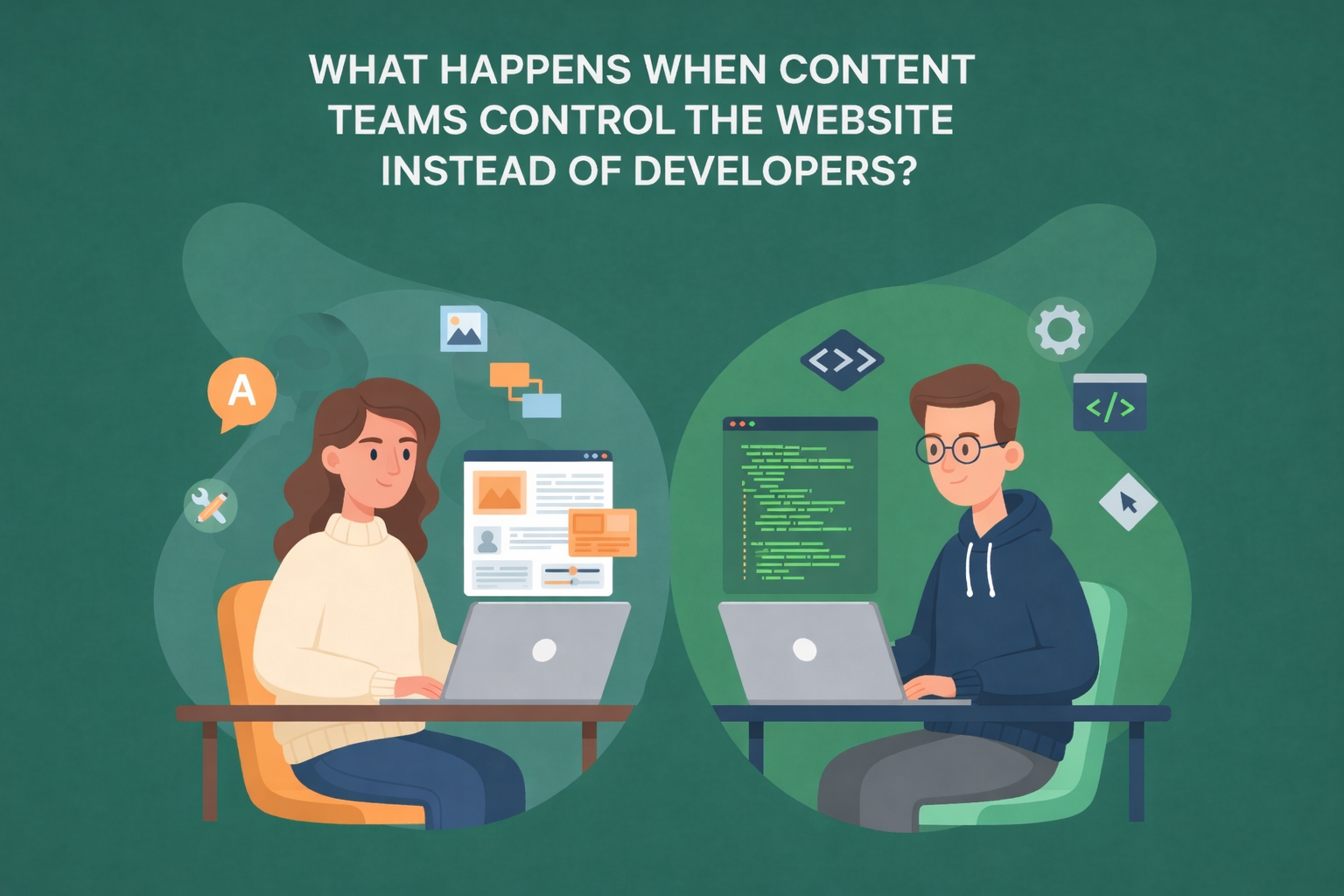
Most websites are built by developers, but once a website goes live, the real work begins. Businesses need to publish blogs, update landing pages, make SEO improvements, launch offers, change banners, and test new campaigns regularly. The question many companies fail to ask is who should control those day to day updates.
In many organisations, developers remain responsible for every website change, even minor edits. While that may seem manageable at first, it often creates unnecessary delays and slows down the entire marketing process. Businesses that allow content teams to manage website updates directly usually move faster, market better, and grow more efficiently.
The Traditional Website Bottleneck
In many companies, the workflow for a basic website update is inefficient. A content or marketing team creates the required copy or campaign idea, then sends it to the developer for implementation. The developer adds it to their queue, and the content team waits until the update is completed.
This delay creates friction in the process. Even simple changes like updating a headline, changing a call to action, fixing a typo, or publishing a landing page can take far longer than necessary. When businesses operate like this, momentum slows down and opportunities are often missed because teams cannot react quickly enough.
Faster Execution Across Marketing Campaigns
When content teams can manage the website themselves, speed improves significantly. Instead of waiting days or weeks for a developer to make changes, updates can happen immediately. New landing pages can go live within hours, campaign messaging can be adjusted instantly, and promotions can launch without technical bottlenecks.
This speed matters because modern marketing moves quickly. Trends change fast, campaigns need constant optimisation, and businesses that react first often gain the advantage. A slow website workflow can directly impact performance, revenue, and lead generation.
Stronger and More Consistent SEO Efforts
SEO is not something businesses set up once and forget about. It requires continuous updates, testing, and optimisation over time. When content teams control the website, they can improve SEO performance without waiting for technical support.
This includes tasks such as:
- Updating meta titles and descriptions
- Improving headings and internal linking
- Publishing blog content consistently
- Refining page structure for search visibility
- Optimising landing pages for target keywords
When SEO updates become easy to implement, businesses stay proactive rather than reactive. This leads to stronger long term rankings and more consistent organic traffic growth.
More Flexibility for Testing and Optimisation
Successful marketing depends heavily on experimentation. Businesses constantly test headlines, layouts, offers, forms, and calls to action to improve conversion rates. However, when every small adjustment requires developer involvement, teams become less willing to test because each experiment feels time consuming and expensive.
When content teams can make adjustments independently, testing becomes part of the normal workflow. Teams can experiment more often, learn faster, and continuously improve results. More testing usually leads to better conversion performance and smarter marketing decisions.
Developers Focus on Higher Value Work
Allowing content teams to manage updates does not reduce the developer’s importance. In fact, it helps developers focus on the work they should be doing. Rather than spending time changing text blocks or replacing images, developers can concentrate on technical priorities that genuinely require their expertise.
These priorities often include:
- Website performance optimisation
- Security improvements
- Backend integrations
- Custom functionality development
- Technical scalability enhancements
This creates a more efficient workflow across the business because every team focuses on what they do best.
Why Structure Matters
Giving content teams control only works when the website is built correctly. Without the right structure, businesses risk inconsistent branding, broken layouts, and poor user experience. A proper content-first website must include a smart system where design elements are structured, templates are organised, and brand consistency remains protected.
This is why choosing the right platform and development approach matters. Businesses need tools that provide flexibility without sacrificing structure.
Why Modern Platforms Support Content First Growth
Modern website platforms such as Framer are designed specifically to support this workflow. They give businesses the ability to maintain developer-grade performance while allowing content teams to make updates easily. This balance ensures the website stays professional, fast, and scalable without becoming dependent on technical teams for every change.
With the right platform, businesses benefit from both control and consistency. Content teams gain flexibility, while developers maintain the technical foundation behind the scenes.
Final Thoughts
A website should support business growth, not slow it down. When content teams control the website, businesses can move faster, improve SEO consistently, test ideas more freely, and respond quickly to market opportunities. Developers remain focused on technical development, while marketers and content teams gain the agility they need to drive results.
At QubeSys, we design and develop websites that give businesses the perfect balance of flexibility, structure, and performance. Whether you need a Framer based business website, high converting landing pages, or a scalable Shopify store, we build systems that empower your team to move at marketing speed. Contact QubeSys today and let us create a website built for modern business growth.