You’ve nailed your product. Your ads are working. Traffic is flowing in.
But the real question is this — are those visitors turning into paying customers?
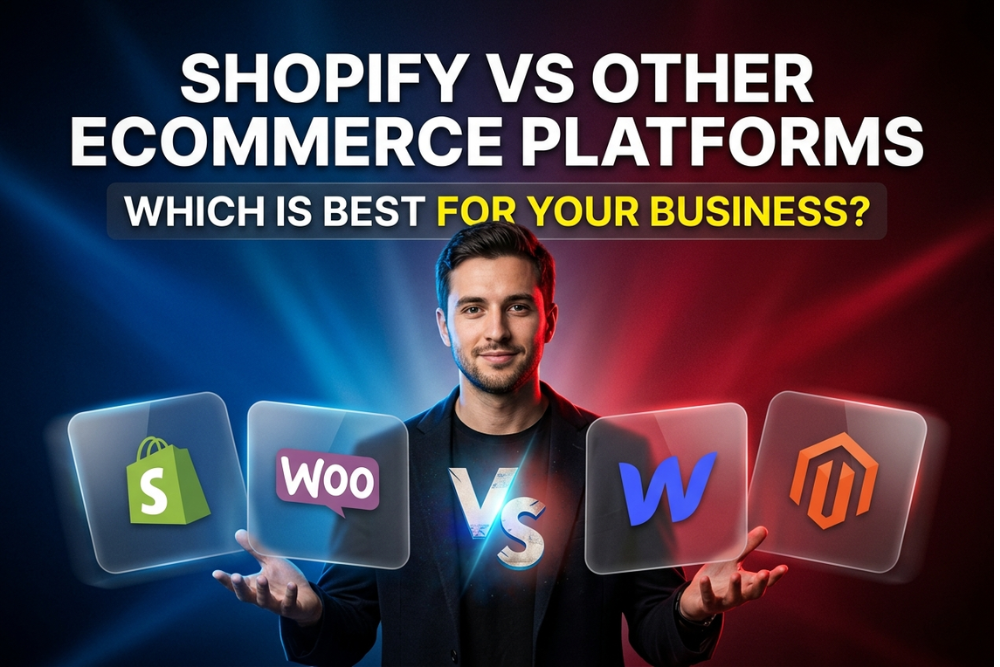
If you’re debating between Shopify and WooCommerce, this guide is your conversion compass. Not just a technical breakdown, but a real performance-focused comparison of which platform actually helps you sell more.
Let’s unpack this, layer by layer — from the moment a user lands on your site to the final “Order Confirmed” click.
First Impressions Matter and UX Sets the Tone
🟢 Shopify: Clean, Confident, Conversion Ready
Shopify feels like a modern showroom. It’s minimal, responsive, and focused on selling. Visitors flow from product pages to checkout without confusion or delay. Everything is built with purpose.
Its mobile experience is slick, speed is consistent, and navigation is frictionless. That makes a direct impact on bounce rates and conversions.
🔵 WooCommerce: Powerful But Needs More Setup
WooCommerce gives you total freedom but expects you to build the experience. Since it runs on WordPress, you’ll often need additional plugins to reach the same level of UX Shopify offers out of the box.
Yes, it’s flexible. But for conversions, simplicity beats complexity.
Bottom Line:
Shopify delivers a smoother user journey and better performance without heavy setup.
The Checkout Battle Where Sales Are Won or Lost
🚀 Shopify Checkout: Fast and Familiar
Shopify’s checkout is one of the best in the industry. It’s secure, minimal, and designed to reduce cart abandonment. Features like Shop Pay make the process lightning fast for returning customers.
Buyers don’t get distracted. They complete orders quickly.
🧩 WooCommerce Checkout: Functional But Lacks Polish
The default WooCommerce checkout does the job but lacks finesse. To get features like one-page checkout or optimized forms, you’ll need third-party plugins. That introduces more steps, costs, and potential issues.
Bottom Line:
Shopify’s native checkout is faster, cleaner, and far more conversion optimized.
Hosting, Speed, and Trust Factors
Shopify: Everything Handled for You
Speed is not optional in ecommerce. A few seconds of delay and your customers drop off. Shopify handles hosting, SSL, backups, and CDN. You don’t worry about the backend. Your store just performs.
WooCommerce: Depends on Your Setup
WooCommerce relies entirely on your hosting. If you choose budget servers or skip caching and optimization, your store could slow down. Security and backups are also your responsibility.
Bottom Line:
Shopify ensures consistent performance. WooCommerce can match it, but only with expert setup.
Apps and Plugins That Help You Sell
Shopify Apps: Built to Boost Revenue
The Shopify App Store is filled with tools designed for one goal — more sales. From upsells and abandoned cart recovery to trust badges and real-time urgency tools, everything is plug and play.
WooCommerce Plugins: Massive but Mixed
WooCommerce has thousands of plugins. Some are brilliant. Others are buggy, slow, or unsupported. You’ll need to research and test before installing anything.
Bottom Line:
Shopify apps are curated for ecommerce and help increase conversions with less effort.
Design and Brand Perception
Shopify: Instantly Looks Premium
Many top D2C brands use Shopify because it just looks and feels trustworthy. The design language, speed, and mobile experience send the right signals to new buyers.
WooCommerce: Fully Custom but Requires Effort
You can make WooCommerce look stunning, but it’s not automatic. You’ll need a well-designed theme, optimization plugins, and attention to detail to match Shopify’s polish.
Bottom Line:
Shopify wins on design trust right out of the box. WooCommerce needs a custom touch.
Pricing and ROI
WooCommerce is technically free but only at the start. You’ll pay for plugins, hosting, security, backups, and possibly a developer. Costs add up quickly if you’re optimizing for conversions.
Shopify is subscription-based. But everything is integrated, maintained, and supported.
Bottom Line:
For brands focused on revenue and simplicity, Shopify delivers better return on investment.
Final Verdict Which Platform Converts Better
If your goal is higher conversions and fewer headaches, Shopify is the stronger choice.
It’s built to sell from day one. You get optimized UX, a world-class checkout, integrated speed and security, and tools that actually move the sales needle.
WooCommerce is ideal for those who want full control and are ready to manage the technical side. But if you want to scale faster with fewer moving parts, Shopify takes the lead.
Build a Shopify Store That Sells While You Sleep
At Qubesys, we help ambitious brands launch high-converting Shopify stores and lightning-fast Framer websites tailored for performance and premium design.
Whether you’re just starting or scaling to seven figures, we bring the experience, design, and tech stack that drives growth.
👉 Reach out now at www.qubesys.com
Let’s create something that doesn’t just look good — it converts.