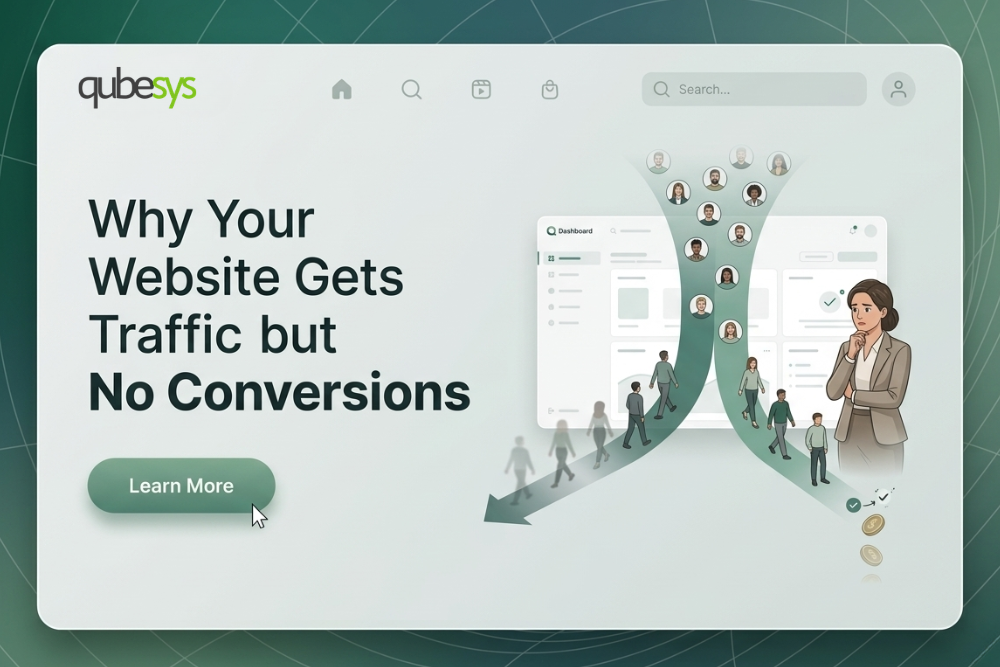
Many website owners assume that more traffic will solve the problem. In reality, if your current traffic is not converting, increasing it will only multiply the inefficiency. The issue is rarely about visibility. It is almost always about experience, clarity, and trust.
The Hidden Gap Between Traffic and Conversions
Traffic and conversions are often treated as the same goal, but they serve different purposes. Traffic brings people in, while conversions turn attention into business results. A website can rank well, run ads successfully, and still fail to convert because the user journey is broken.
Visitors arrive with expectations. If your website does not match those expectations within a few seconds, they leave. This disconnect happens silently, and analytics only show the symptom, which is a high bounce rate or low conversion rate.
Poor First Impressions Kill Intent
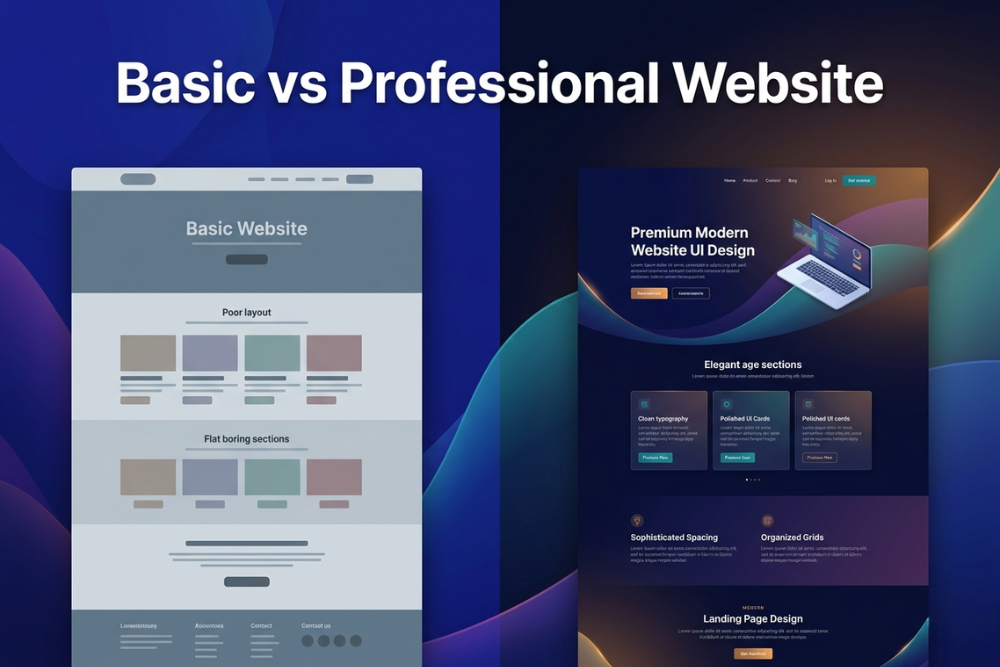
Users form an opinion about your website almost instantly. Design, layout, and visual hierarchy play a major role in whether they stay or leave. A cluttered interface, outdated visuals, or inconsistent branding creates doubt, even if your product or service is strong.
A well-designed website does not just look good. It guides attention, builds confidence, and reduces friction. When users feel unsure about what to do next, they exit without hesitation.
Your Message Is Not Clear Enough
One of the most common reasons for low conversions is unclear messaging. Visitors should immediately understand what you offer, who it is for, and why it matters. If they have to scroll, read multiple sections, or guess your value, you lose them.
Clear messaging includes:
- A strong headline that communicates the core value
- A subheading that explains the benefit in simple terms
- Supporting content that reinforces trust and relevance
When messaging is vague or overloaded with jargon, users disengage quickly.
Weak Call to Action
Even interested users need direction. If your website does not clearly tell them what to do next, they will not take action. A weak or hidden call to action creates hesitation, and hesitation leads to drop-offs.
A strong call to action should:
- Be visible without excessive scrolling
- Use direct and action-oriented language
- Create a sense of clarity, not pressure
Buttons like “Submit” or “Learn More” often underperform compared to more specific alternatives that explain the outcome.
Slow Loading Speed and Technical Friction
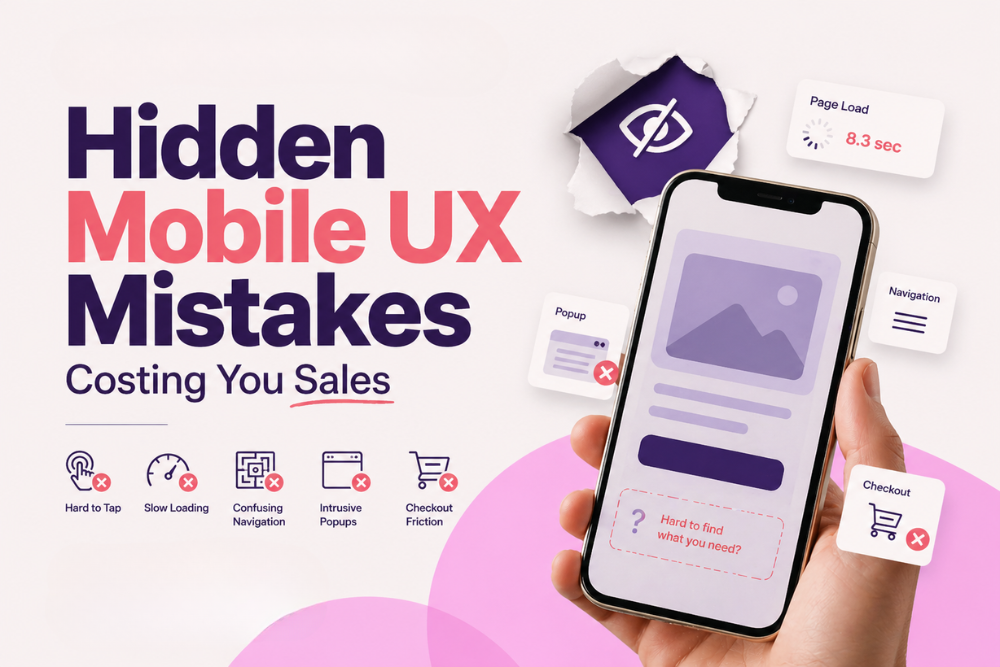
Speed has a direct impact on conversions. Users expect websites to load quickly, especially on mobile devices. Even a few seconds of delay can reduce engagement significantly.
Technical issues that affect conversions include:
- Slow loading times
- Broken layouts on mobile devices
- Forms that do not work properly
- Confusing navigation structure
These issues create frustration, and frustrated users rarely convert.
Lack of Trust Signals
Trust is a critical factor in online decision-making. Visitors need reassurance before they share their information or make a purchase. If your website lacks credibility indicators, users hesitate.
Common trust signals include:
- Client testimonials or reviews
- Case studies or past work
- Clear contact information
- Secure payment or data protection indicators
Without these elements, even high-intent visitors may leave without converting.
Mismatch Between Traffic Source and Landing Page
Not all traffic is equal. If your ads or SEO content promise something that your landing page does not deliver, users feel misled. This mismatch creates a disconnect that leads to immediate exits.
For example, if an ad highlights a specific offer but the landing page is generic, users lose interest. Consistency between traffic source and landing page experience is essential for conversions.
Comparison: High Traffic vs High Conversion Websites
| Factor | High Traffic, Low Conversion | High Conversion Websites |
|---|---|---|
| Design | Cluttered or outdated | Clean and structured |
| Messaging | Vague or generic | Clear and specific |
| Speed | Slow loading | Fast and optimized |
| CTA | Weak or unclear | Strong and visible |
| Trust | Minimal proof | Strong credibility signals |
| User Flow | Confusing navigation | Guided journey |
You Are Attracting the Wrong Audience
Sometimes the problem is not the website, but the audience itself. If your traffic comes from irrelevant keywords or poorly targeted ads, those visitors were never likely to convert.
Quality matters more than quantity. A smaller, more relevant audience often generates better results than large volumes of untargeted traffic.
How to Start Fixing the Problem
Improving conversions requires a structured approach. Instead of guessing, focus on identifying friction points and optimizing them step by step.
Start with these actions:
- Review your homepage and landing pages for clarity
- Test your website speed and mobile responsiveness
- Simplify your call to action
- Add trust-building elements like testimonials and case studies
- Align your traffic sources with your landing page content
Small improvements in these areas can significantly increase your conversion rate without increasing traffic.
Conclusion
Traffic without conversions is a sign that something is not working within your website experience. The issue is rarely one single factor. It is usually a combination of design, messaging, speed, and trust. Fixing these areas requires attention to detail and a clear understanding of user behavior.
Work With QubeSys
If your website is getting traffic but not generating results, it is time to rethink how it is built and structured. QubeSys specializes in creating high-converting websites using platforms like Framer, along with performance-driven landing pages and Shopify stores designed for real business growth. If you are serious about turning your traffic into measurable outcomes, get in touch with QubeSys and start building a website that actually converts.