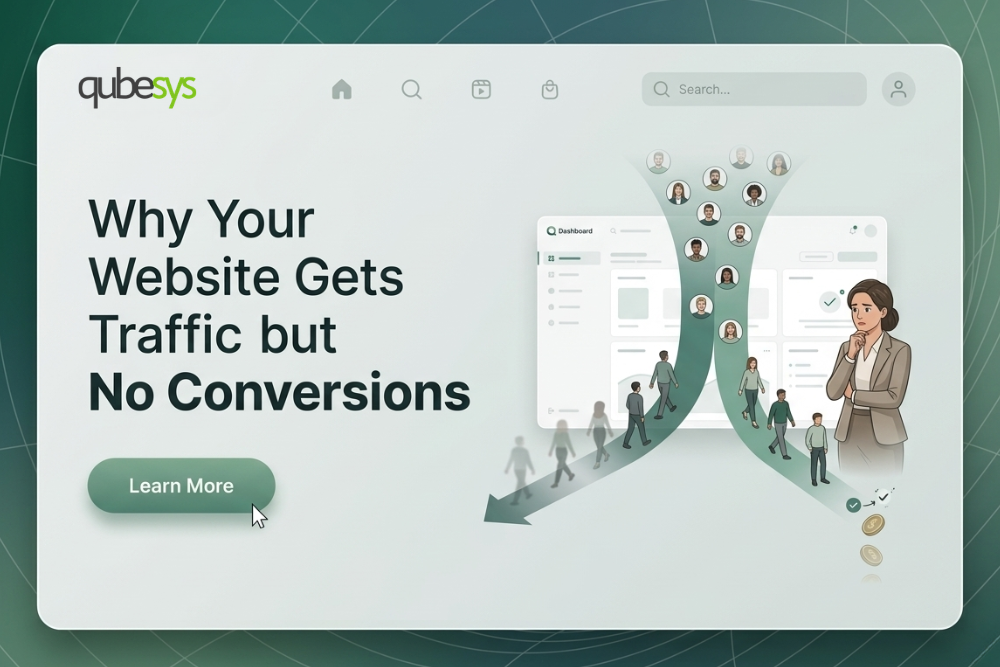
A website can look decent on the surface and still fail completely at doing its job.
Many businesses launch websites thinking that simply being online is enough. They have a homepage, service pages, contact information, and maybe even a nice logo. But despite having all the “required” elements, the website brings in little traffic, generates few leads, and fails to build trust with visitors.
That is because there is a major difference between a website that merely exists and a website that performs.
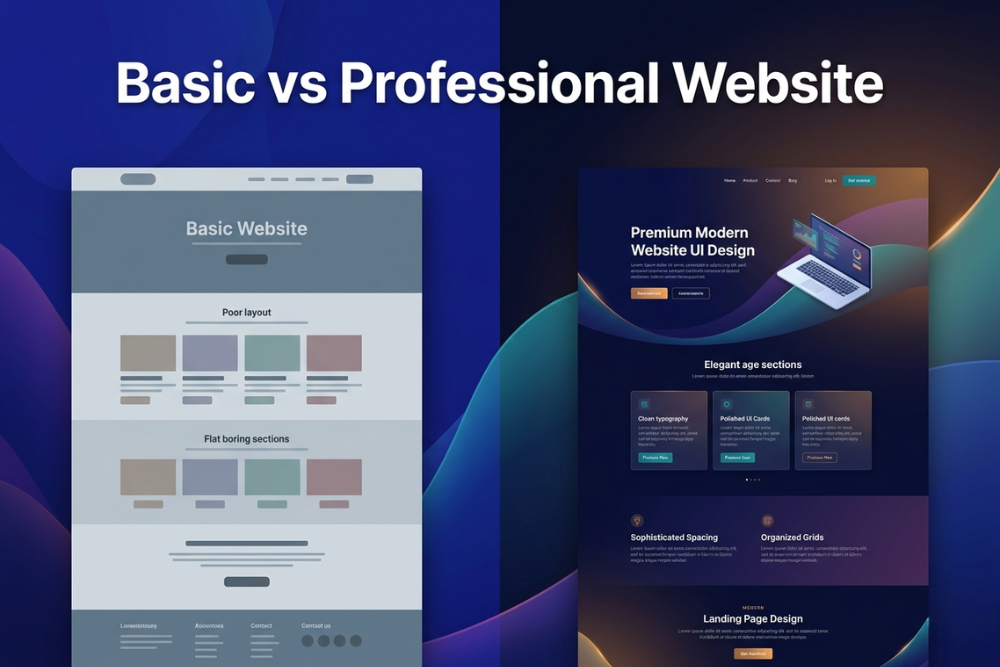
The gap between a basic website and a professional one is not about flashy design or expensive animations. It is about strategy, structure, psychology, branding, performance, and user experience. A professional website is intentionally built to support business growth, while a basic website is often just assembled to fill space online.
In this blog, we will break down what truly separates a professional website from a basic one, and why that difference matters more than most businesses realize.
Design With Purpose, Not Just Decoration
One of the clearest signs of a basic website is design without direction. It may include colors, images, and sections, but everything feels placed randomly. There is no structure guiding the visitor, and no thought behind how the design supports user behavior.
A professional website is designed with purpose. Every section has a reason to exist, every visual element supports the message, and the entire layout is built to guide users toward action. Professional design is not about making a website “look pretty.” It is about creating an experience that builds trust and moves visitors naturally from interest to conversion.
When users land on a professional website, they instantly understand where to look, what the business offers, and what step to take next.
Strong Branding That Feels Consistent
Basic websites often feel disconnected. The colors may not match the brand identity, the fonts may vary from page to page, and the messaging may sound inconsistent. This creates confusion and weakens credibility.
Professional websites maintain brand consistency across every touchpoint. Fonts, colors, imagery, tone of voice, spacing, and messaging all work together to create one unified brand experience. This consistency makes the business feel established, trustworthy, and memorable.
When branding is done correctly, visitors start associating the website experience with professionalism itself.
Messaging That Sells Clearly
A common mistake on basic websites is vague messaging. Many businesses fill their homepage with generic phrases like “We provide quality services” or “Your trusted partner for excellence.” While these may sound professional, they say very little and fail to communicate real value.
Professional websites use clear, benefit-driven messaging. They explain exactly what the business does, who it helps, and why it is different. Instead of sounding generic, the copy speaks directly to customer pain points and positions the business as the solution.
Clear messaging is one of the biggest factors behind whether a visitor stays or leaves.
User Experience That Feels Effortless
Visitors should never have to “figure out” how to use your website. On a basic website, navigation is often confusing, layouts feel cluttered, and important information is difficult to find.
Professional websites prioritize user experience from the beginning. Navigation is intuitive, information is structured logically, and the visitor journey feels smooth from start to finish. The goal is to remove friction so users can focus on engaging with the business, not struggling with the interface.
A better user experience often translates directly into higher conversion rates.
Performance and Speed Optimization
Website speed is no longer optional. A slow website damages SEO, frustrates users, and increases bounce rates. Unfortunately, many basic websites are overloaded with large images, poor coding practices, and unnecessary plugins.
Professional websites are optimized for performance. Images are compressed properly, code is clean, scripts are minimized, and loading times are carefully monitored. Fast websites not only improve user satisfaction but also help rank better in search engines.
A visitor may forgive many things, but they rarely forgive a slow website.
Mobile Responsiveness Done Properly
Many businesses believe their website is mobile-friendly simply because it “opens” on a phone. That is not enough.
A professional website is designed specifically for responsiveness across all devices. Text remains readable, buttons stay clickable, layouts adapt cleanly, and the mobile experience feels just as polished as desktop. Since a large portion of traffic now comes from mobile users, poor responsiveness can destroy engagement instantly.
Professional businesses treat mobile optimization as essential, not optional.
SEO Structure Built From Day One
One of the biggest hidden differences between a basic and professional website is what happens behind the scenes.
Basic websites often ignore SEO fundamentals completely. Poor heading structure, missing metadata, unoptimized images, broken internal linking, and messy page architecture make it harder for search engines to understand the site.
Professional websites are built with SEO in mind from day one. This includes:
- Proper heading hierarchy
- Optimized meta titles and descriptions
- Fast loading speed
- Clean URL structures
- Keyword-focused content placement
- Internal linking strategy
- Schema and technical SEO setup
Without this foundation, even the best-looking website may struggle to rank.
Trust Elements That Build Credibility
People buy from businesses they trust. Basic websites often fail because they do not provide enough reassurance to visitors.
Professional websites strategically include trust-building elements such as:
- Testimonials and reviews
- Client logos
- Case studies
- Certifications
- Portfolio examples
- Strong about pages
- Clear contact information
These elements reduce hesitation and make the business appear credible, experienced, and legitimate.
Conversion-Focused Strategy
Perhaps the most important difference is this.
A basic website exists to provide information. A professional website exists to generate results.
Everything on a professional website is built around conversion strategy. Buttons are placed intentionally, calls-to-action are written persuasively, layouts are structured to maintain attention, and landing pages are optimized to turn traffic into leads or sales.
Professional websites understand that traffic means nothing if visitors do not convert.
Basic vs Professional Website Comparison
| Feature | Basic Website | Professional Website |
|---|---|---|
| Design | Generic and template-like | Strategic and brand-focused |
| Messaging | Vague and broad | Clear and persuasive |
| Speed | Often slow | Optimized for performance |
| Mobile Experience | Basic responsiveness | Fully polished mobile UX |
| SEO | Minimal setup | Built with SEO structure |
| Branding | Inconsistent | Cohesive and memorable |
| Conversion Strategy | Informational only | Designed to generate leads |
| User Experience | Can feel confusing | Smooth and intuitive |
Final Thoughts
A professional website is not simply a better-looking version of a basic one. It is a business tool built with strategy, psychology, and performance in mind. It communicates clearly, builds trust quickly, and guides visitors toward taking action.
Many businesses lose opportunities every day because their website looks acceptable but does not perform professionally. In today’s market, customers judge your credibility within seconds, and your website often makes that first impression before you ever speak to them.
Contact QubeSys
If your current website feels outdated, underperforming, or too basic for your brand, QubeSys helps businesses build high-converting digital experiences through modern Framer websites, premium landing pages, and Shopify store development tailored for performance and growth. Contact QubeSys today to create a website that not only looks professional but drives real business results.
Subscribe To Receive The Latest Updates
We talk about tech only
Add notice about your Privacy Policy here.