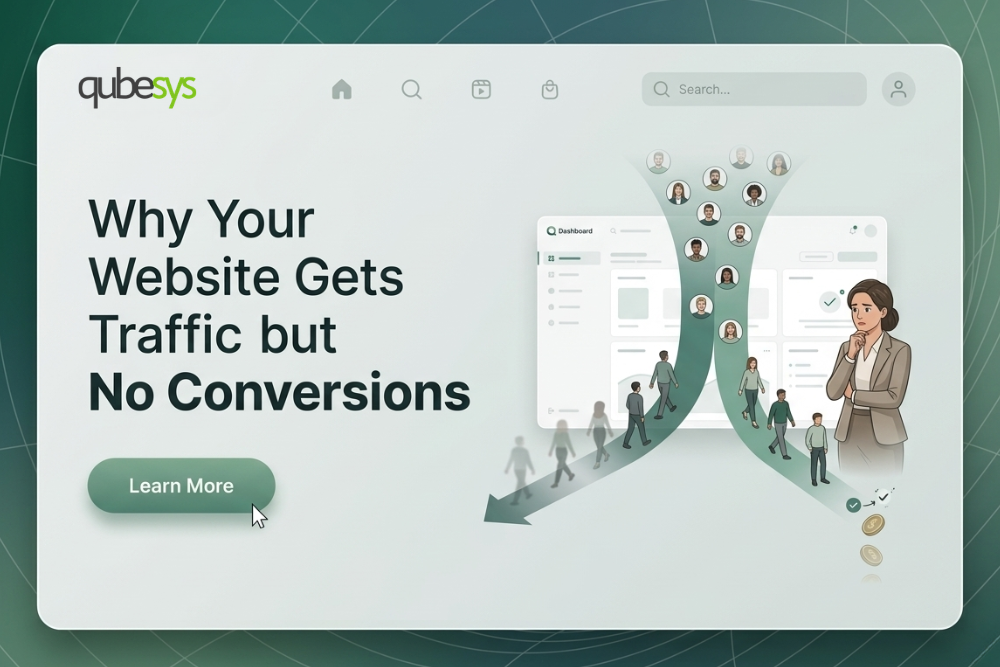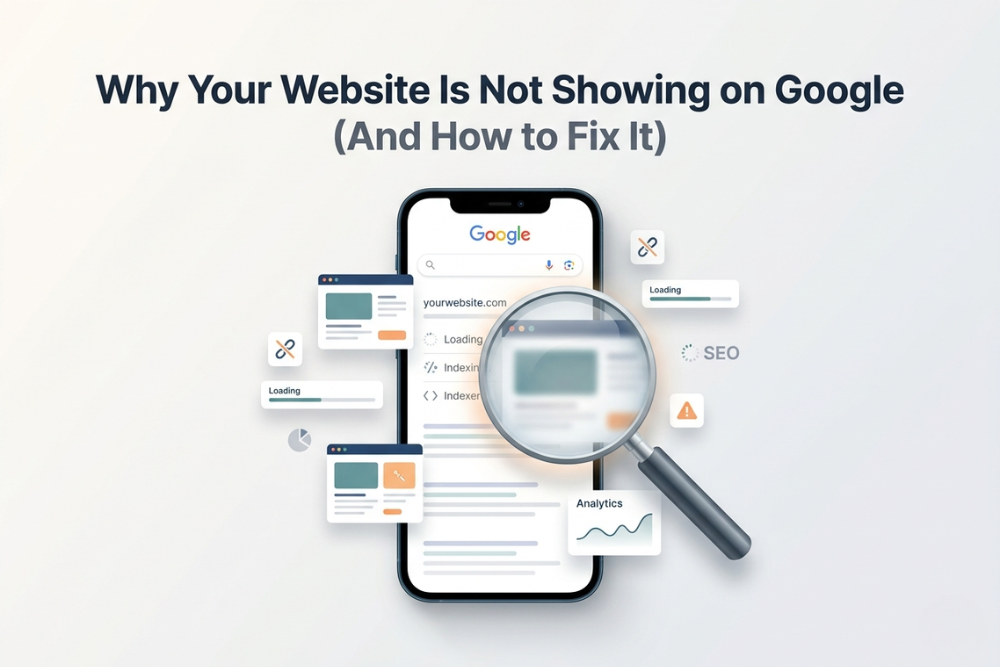
You search for your website on Google, type in your business name, and press enter, only to find nothing. Not on the first page, not on the tenth, and sometimes nowhere at all. It can feel frustrating, especially after investing time and money into building your website. However, if your website is not appearing on Google, there is always a reason behind it, and in most cases, the issue can be fixed with the right approach.
Google May Not Know Your Website Exists Yet
One of the most common reasons your website does not appear on Google is that it has not been indexed yet. This happens frequently with newly launched websites or websites that were never properly submitted to search engines. Even if your website is live, Google may still be unaware that it exists.
Some common causes include:
- No sitemap has been submitted
- The website is not connected to Google Search Console
- There are no signals helping Google discover the website
To resolve this, submit your website to Google Search Console, upload your sitemap.xml file, and manually request indexing. Think of this as putting your business on the map so Google can find it.
Your Website May Be Blocking Search Engines
In some cases, websites accidentally block Google from accessing them. This often happens during development when websites are built in staging mode, and the restrictions are never removed after launch. As a result, search engines are prevented from crawling the website.
Typical reasons include:
- A robots.txt file blocking access
- Noindex tags placed on pages
- Search engine visibility disabled in website settings
You should review your robots.txt file, remove unnecessary noindex tags, and ensure search engines are allowed in your CMS or hosting settings. This is a surprisingly common issue that can completely prevent a website from appearing in search results.
Technical Problems May Be Hurting Your Visibility
Google evaluates your website experience in a similar way to how users experience it. If your website loads slowly, contains broken pages, or performs poorly on mobile devices, Google may reduce its visibility in search rankings.
Some technical issues that often impact rankings include:
- Slow loading speed
- Broken links or missing pages
- Poor mobile responsiveness
- Unreliable hosting performance
Improving website speed, fixing broken links, optimizing for mobile users, and choosing reliable hosting can significantly improve your website’s ability to rank. Google prioritizes websites that offer a smooth and user-friendly experience.
Your Content May Not Be Strong Enough to Rank
Content quality plays a major role in search rankings. If your website has thin, low-value, or unhelpful content, Google may not consider it worthy of ranking above competitors. Simply having pages on your website is not enough if those pages do not provide useful information.
This usually happens when:
- The content is too short or lacks depth
- There is no keyword strategy in place
- The information does not answer user intent
To improve rankings, focus on creating detailed and informative content that answers real customer questions and solves actual problems. The goal should not be to fill pages with text, but to provide genuine value to visitors.
Your Website Lacks Authority and Trust
Google values trust when deciding which websites to rank. If your website has no backlinks, no mentions online, and little brand presence, it may struggle to compete against more established websites.
Some signs of low authority include:
- No backlinks from other websites
- Limited business listings or mentions online
- Weak brand presence across platforms
Building backlinks from reputable websites, listing your business in directories, and increasing your brand visibility online can improve your authority over time. Every quality backlink acts as a trust signal that strengthens your website in Google’s eyes.
SEO Results Take Time
One of the biggest misconceptions about SEO is expecting instant results. Search engine optimization is a long-term process, and Google needs time to crawl, understand, and trust your website before it begins ranking higher.
What matters most is:
- Consistency in updates
- Ongoing content improvements
- Patience during the ranking process
Many businesses give up too early because they expect immediate traffic. In reality, long-term SEO success comes from persistence and consistent effort over time.
Final Thoughts
Getting your website to appear on Google is not about luck. It comes down to making sure your site is technically sound, properly indexed, valuable to users, and trusted by search engines. By addressing indexing issues, fixing technical problems, improving content, and building authority, you can dramatically improve your chances of ranking.
At QubeSys, we build high-performance websites that are designed not only to look professional but also to rank, convert, and support business growth. Whether you need a fast-loading business website, an SEO-friendly landing page, or a scalable ecommerce store, our team creates websites using modern technologies like Framer, Shopify, and WordPress with performance and search visibility in mind. If you want a website that is built to generate real results, contact QubeSys today and let us help turn your online presence into a growth engine.