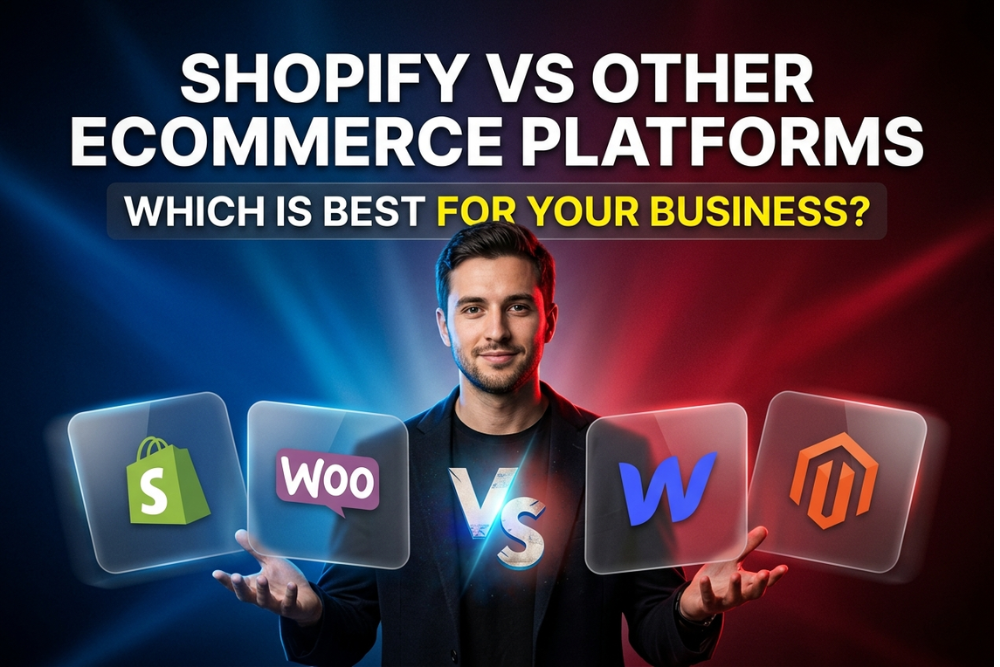
Starting an ecommerce business often begins with a simple idea, build a website and start selling online. However, once business owners begin researching ecommerce platforms, they quickly find themselves comparing options like Shopify, WooCommerce, Webflow, and Magento. With every platform claiming to be the best, making the right decision can become overwhelming.
The truth is that there is no single platform that works best for every business. The right choice depends entirely on your business model, technical needs, goals, and stage of growth. Choosing the wrong platform can create unnecessary costs, technical limitations, and long-term frustration. Understanding what each platform offers can help you make a smarter decision from the beginning.
Start by Understanding Your Business Needs
Before choosing any ecommerce platform, it is important to evaluate what your business actually requires. A platform that works well for a beginner may not be suitable for a larger business with advanced needs. Likewise, an enterprise-level platform may be far more complex than necessary for a startup.
Some key questions to consider include:
- Are you just launching or already generating sales?
- Do you need speed and simplicity or deep customization?
- Do you have technical knowledge or access to developers?
- Is your focus on short-term sales or long-term scalability?
Answering these questions first will help narrow down the platform that best fits your situation.
Shopify: Best for Fast and Simple Launches
Shopify is one of the most popular ecommerce platforms because it makes launching an online store quick and accessible. It is built specifically for ecommerce and offers a streamlined setup process that works well for beginners and businesses that want to launch quickly.
Key advantages of Shopify include:
- Easy setup with no coding required
- Hosting and security included
- Large ecosystem of apps and integrations
- Mobile-optimized themes by default
- Reliable infrastructure for handling sales
However, Shopify also has limitations that businesses should consider:
- Monthly subscription costs increase over time
- Additional app fees can add up quickly
- Limited flexibility for advanced customization
- Transaction fees may apply depending on payment setup
Shopify is ideal for businesses that prioritize speed, simplicity, and ease of management.
WooCommerce: Best for Flexibility and Control
WooCommerce is a WordPress-based ecommerce solution that provides greater flexibility and customization than many hosted platforms. It is widely used by businesses that want more control over functionality, design, and SEO.
Benefits of WooCommerce include:
- Full control over customization
- No platform lock-in restrictions
- Strong SEO flexibility
- No mandatory platform subscription fees
Potential drawbacks include:
- Requires separate hosting and domain setup
- Needs ongoing maintenance and updates
- Can become complex without technical knowledge
WooCommerce is a strong choice for businesses that want flexibility and either have technical experience or work with a developer.
Webflow: Best for Design-Focused Brands
Webflow is known for offering exceptional design freedom and visual customization. While not as ecommerce-focused as Shopify, it provides a premium design experience that appeals to branding-focused businesses looking for a unique website.
Advantages of Webflow include:
- Highly polished and custom visual design options
- Clean and modern interface
- Excellent for branding-driven businesses
- Strong flexibility for creative layouts
Limitations include:
- Ecommerce tools are less advanced than Shopify
- Pricing can become expensive at scale
- Requires time to learn effectively
Webflow is best suited for businesses where branding and aesthetics are a top priority and ecommerce complexity is relatively low.
Magento: Best for Large-Scale Enterprise Stores
Magento is a powerful enterprise-level ecommerce platform designed for large businesses with complex requirements. It offers advanced functionality and scalability but comes with significantly higher development and maintenance demands.
Strengths of Magento include:
- Advanced customization capabilities
- Enterprise-grade scalability
- Robust ecommerce features
Challenges include:
- High development and setup costs
- Requires experienced developers
- Not practical for small businesses or beginners
Magento is typically only recommended for large organizations with significant budgets and technical teams.
Quick Comparison of Ecommerce Platforms
| Platform | Best For | Main Advantage | Main Limitation |
|---|---|---|---|
| Shopify | Beginners and fast launches | Easy setup and reliability | Ongoing monthly and app costs |
| WooCommerce | Businesses needing flexibility | Full control and customization | Requires maintenance |
| Webflow | Design-focused brands | Premium visual design freedom | Limited ecommerce depth |
| Magento | Large enterprises | Advanced scalability | Expensive and complex |
The Platform Alone Does Not Guarantee Success
Many businesses spend too much time searching for the “perfect” platform and assume the technology itself will determine success. In reality, the platform is only a tool. Your product quality, branding, marketing strategy, and customer experience will have a much larger impact on your results than the platform you choose.
A weak business model will struggle regardless of platform, while a strong brand with effective strategy can perform well on nearly any reliable system. Choosing the right platform matters, but execution matters even more.
Which Option Makes the Most Sense for You?
If you are looking for a practical recommendation, here is a simple way to think about your decision:
- Choose Shopify if you want the easiest and fastest way to start selling online
- Choose WooCommerce if you want long-term flexibility and greater control
- Choose Webflow if visual branding and premium design matter most
- Choose Magento if you operate at enterprise scale and need advanced infrastructure
The smartest decision is not choosing what is most popular, but choosing what fits your current business stage and long-term goals.
Ready to Build an Ecommerce Store That Performs?
Choosing the right ecommerce platform is only the first step. The real value comes from building a store that is designed to convert visitors into paying customers. A well-built ecommerce website should combine strategy, user experience, and performance to support real business growth.
At QubeSys, we help businesses create conversion-focused digital experiences that are built for results. Whether you need a high-converting Shopify store, a premium Framer landing page, or a modern Webflow website, our team designs every project with performance and growth in mind. If you are ready to build an ecommerce website that supports your business goals, contact QubeSys today and let us help you create something built to generate real results.
Subscribe To Receive The Latest Updates
We talk about tech only
Add notice about your Privacy Policy here.