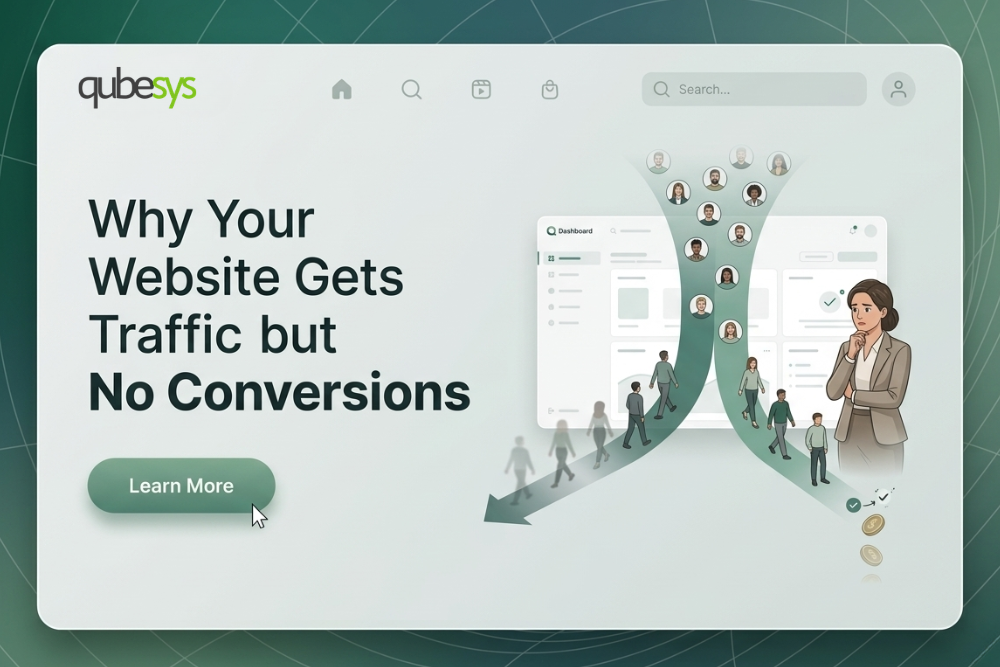
Thinking Website Design Is Only About Appearance
A common misconception is that website design is simply about making something visually attractive. Business owners often focus heavily on colors, animations, and layout style while ignoring the strategic side of web design. While appearance matters, design without strategy is simply decoration.
A high-performing website should be built around core business objectives. This includes creating a clear user journey, using conversion psychology, ensuring fast loading speed, delivering structured messaging, and maintaining a mobile-first experience. If your website looks premium but fails to generate leads or sales, then it is not doing its job. Good design should influence action, not just impress visitors.
Treating the Website Like a One-Time Expense
Many businesses make the mistake of viewing their website as a one-time project. They invest in it once, launch it, and then forget about it for years. This approach hurts long-term performance because websites require continuous improvement.
Think of your website as your digital salesperson. You would never hire a salesperson and never train or evaluate them again. In the same way, your website needs ongoing performance tracking, regular updates, conversion optimization, and content improvements. Businesses that dominate online treat their website as an evolving asset, not a one-time expense.
Ignoring Mobile Experience
Today, the majority of website traffic comes from mobile devices, yet many business owners still only review their websites on desktop. This creates major usability issues for visitors browsing on phones and tablets.
Some of the most common mobile-related mistakes include:
- Text that is too small to read comfortably
- Buttons placed too close together
- Slow loading mobile pages
- Cluttered or broken layouts
If your mobile experience is poor, potential customers may leave before they even understand what you offer. Mobile optimization is no longer optional. It is the standard for modern web design.
Not Prioritizing Website Speed
Website speed directly impacts user trust, search rankings, and conversion rates. Visitors have little patience for slow-loading pages. If your website takes too long to load, users will leave before interacting with your content.
Slow websites are often caused by:
- Oversized or unoptimized images
- Poor hosting infrastructure
- Outdated website frameworks
- Unoptimized or bloated code
A fast website feels modern and professional, while a slow website creates frustration and distrust. Speed is one of the most important technical elements of website performance.
Overcomplicating the User Journey
Another common issue is trying to say too much at once. Many websites overload visitors with too many sections, too many service descriptions, and too many buttons competing for attention.
When visitors feel overwhelmed, they usually leave rather than explore further. A great website should have:
- One clear primary objective
- A strong headline that communicates value
- A clear and visible call to action
- A logical flow of information
Simplicity and clarity consistently outperform complexity in web design.
Forgetting SEO Structure
A visually appealing website is useless if nobody can find it. Many business owners invest in design but ignore SEO structure, making their website nearly invisible in search engines.
SEO goes beyond keywords. Proper website optimization includes:
- Clean heading hierarchy
- Technical SEO setup
- Internal linking between pages
- Fast performance and page speed
- Optimized meta titles and descriptions
Without proper SEO, your website depends entirely on paid traffic. With SEO, your website becomes a long-term source of organic visibility and leads.
Copying Ecommerce Templates Without Strategy
For ecommerce businesses, launching a store with a ready-made template often feels like enough. However, successful ecommerce stores require much more than a nice-looking theme.
High-performing ecommerce websites focus on:
- Product psychology and persuasive messaging
- Trust-building elements such as reviews and guarantees
- Conversion-focused product page layouts
- Optimized checkout experiences
- Strategic upsells and cross-sells
Ecommerce success is not about templates. It is about structuring the customer journey to maximize sales.
Not Matching Website Design to Brand Positioning
If your business positions itself as premium but your website looks average, your branding becomes inconsistent. Visitors judge your brand within seconds, and your website heavily influences that perception.
Your website should reflect:
- Your pricing level
- Your target audience
- Your market positioning
- Your authority within the industry
Premium businesses require a premium digital presence. Design communicates your value before you ever speak to a customer.
Ignoring Analytics and User Data
Many business owners redesign their website based purely on opinion. They choose layouts and colors based on personal preference rather than actual user behavior.
Smart businesses use data to improve performance. Key metrics to track include:
- Bounce rate
- Scroll behavior
- Conversion rate
- Heatmaps
- User drop-off points
When design decisions are backed by data, websites perform better because they are built around real user behavior, not assumptions.
Underestimating the Power of Landing Pages
A major mistake businesses make is sending paid traffic directly to their homepage. While homepages are useful for general visitors, they are rarely optimized for conversion.
Landing pages are designed around one goal:
- One offer
- One audience
- One clear action
When structured correctly, landing pages can dramatically increase conversion rates and improve ad performance.
Your Website Should Drive Business Growth
Your website is more than an online brochure. It is your brand’s digital headquarters. It influences trust, shapes perception, and directly impacts revenue. When built strategically, it becomes one of your most powerful business tools. When built casually, it becomes a missed opportunity.
The difference lies in strategy, expertise, and execution.
Build a Website That Performs, Not Just Exists
If you are serious about improving your online presence, it may be time to work with professionals who understand both design and business strategy.
At Qubesys, based in Dubai and serving clients since 2008, we build strategic websites that do more than look attractive. We create high-converting Framer websites, performance-focused landing pages, Shopify ecommerce stores, and modern web solutions built around real business growth.
Whether you need a premium landing page, a scalable Shopify store, or a modern business website, our team ensures your website is designed to perform.
Visit www.qubesys.com and let’s build something that actually grows your business.