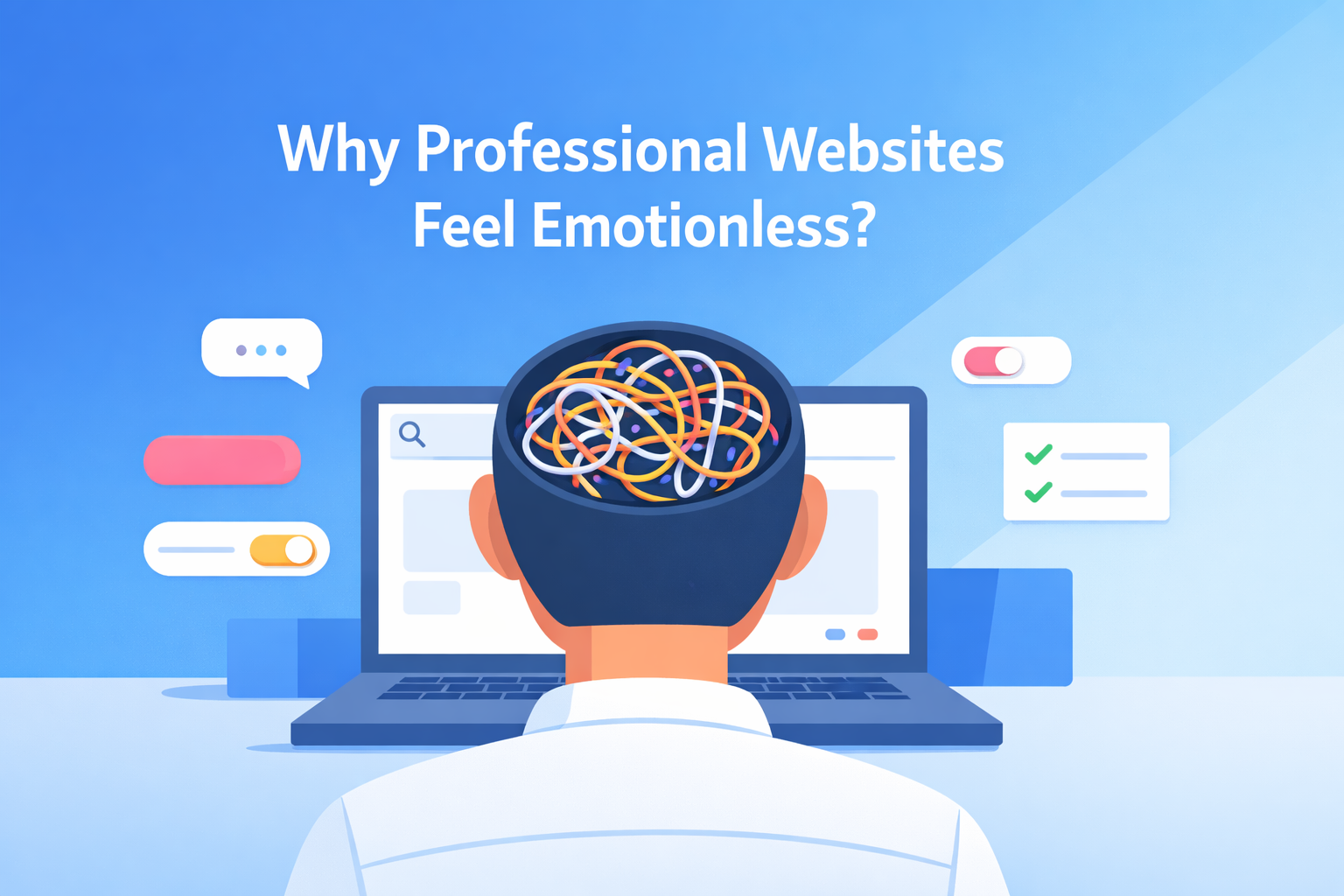
Walk through ten business websites today and you will notice a pattern. Clean layouts, perfect grids, safe colors, polished fonts. Everything looks right. Yet nothing feels memorable.
You scroll. You skim. You leave.
This is the silent problem with many professional websites. They look impressive but feel cold. No emotion. No connection. No reason to stay.
Let us break down why this happens and how modern brands are fixing it.
What We Mean by “Professional” Websites
In most cases, professional websites follow a formula.
-
Neutral color palettes
-
Stock images with forced smiles
-
Generic headlines like “We Deliver Solutions”
-
Predictable layouts
-
Overused buzzwords
These elements are not wrong. They are safe. And that is exactly the problem.
Safety rarely creates emotion.
Why Emotion Matters More Than Ever
People do not connect with layouts. They connect with stories, feelings, and clarity.
Your website is not just a brochure. It is a conversation. And conversations without emotion feel awkward and forgettable.
Emotion drives:
-
Trust
-
Time spent on page
-
Conversions
-
Brand recall
If your website feels emotionless, users subconsciously assume the brand behind it is the same.
The Real Reasons Professional Websites Feel Cold
1. Design Is Chosen for Approval, Not Impact
Many websites are designed to please internal teams, not users.
Questions like:
-
Will this look safe to everyone?
-
Will this offend anyone?
-
Will this look similar to competitors?
These decisions slowly remove personality. What remains is a website that looks correct but says nothing.
2. Stock Content Replaces Real Stories
Stock photos and generic copy save time, but they also erase authenticity.
Users can instantly sense when:
-
Images feel staged
-
Text feels written for Google, not humans
-
Testimonials sound too polished
Real emotion comes from real stories, not placeholders.
3. Over-Optimization Kills Human Touch
SEO is important. But when every line is written only for keywords, the human voice disappears.
Phrases become stiff.
Headings become mechanical.
Flow feels forced.
The result is content that ranks but does not resonate.
4. No Clear Brand Voice
Many professional websites speak in the same tone.
Formal. Distant. Vague.
But users want to know:
-
Who are you really?
-
Why do you do what you do?
-
How do you think?
Without a clear voice, the website feels like it belongs to no one.
How Modern Websites Bring Emotion Back
1. Designing Around Feelings, Not Just Layouts
Modern tools like Framer and Webflow allow motion, interaction, and storytelling without clutter.
Subtle animations.
Intentional spacing.
Guided scroll experiences.
These elements make users feel something without distracting them.
2. Writing Like a Human, Not a Corporation
Clear language wins.
Simple sentences.
Direct messaging.
Honest tone.
Users trust brands that speak like people, not policy documents.
3. Showing Personality Through Micro Details
Emotion lives in the small things.
Button labels that feel friendly.
Microcopy that reassures.
Images that reflect real teams or real customers.
These details turn a professional website into a relatable one.
Professional Does Not Mean Emotionless
Professional should mean:
-
Clear
-
Trustworthy
-
Thoughtful
It does not have to mean boring.
The best websites today balance structure with soul. They look refined but feel alive.
That balance is what separates forgettable websites from high-performing ones.
Ready to Build a Website That Feels Human?
At Qubesys, we design and develop websites that combine professional structure with real emotion.
Whether you need:
-
Framer-based websites or landing pages
-
High-conversion Shopify store development
-
Modern Webflow experiences
We focus on clarity, performance, and connection.
👉 Get in touch with Qubesys today and let us build a website that not only looks professional, but actually feels right.